
How to Stabilize Your Blood Sugar with Movement
By Sarah Petty
This blog is for education purposes only. I have a master's degree in nutrition, years of experience coaching movement for people with chronic diseases, and a reasonable understanding of insulin resistance physiology. I am not a doctor. Please review any information that you feel is relevant with your primary care provider, and do not consider this medical advice.If you read my previous blog about blood sugar regulation, you know that the endocrine system is complex. Many, many factors can affect your blood sugar. And with so many medications, supplements, and advice on the market, it’s easy to feel overwhelmed with choices when you decide to take action.
But there’s one intervention that works so well, it should be your first choice:
It’s movement.
I have a bit of a chuckle every single time I review the latest research on movement and blood sugar, because it keeps saying the same thing (just more specifically): movement improves glucose regulation and insulin sensitivity exceptionally well.
Sometimes, movement works even better than medication.
Often, movement is more tolerable than medication.
Regularly, movement is more accessible than medication.
There’s a common saying: “if movement were a drug, every doctor would prescribe it.” That’s because of how many body systems movement almost magically improves. The endocrine system is no different!

Why does movement work so well?
For one thing, skeletal muscle is your hero. It is THE predominant site of insulin-stimulated glucose disposal! Eighty percent of the glucose made when you eat is stored in your muscles. This is why you can do mental and physical tasks even when it’s been a few hours since you ate and there’s no new glucose coming in - your body is able to convert the stored glucose into useable energy (as well as use body fat as an energy source).
Every time you move, whether it’s getting up off the couch to go to the bathroom, walking around the block, or running a 5K, you are clearing out the stored glucose in your muscles. This does two important things:
1) It makes room for more glucose to be stored, preventing a backlog of high blood sugar next time you eat.
2) It improves the efficiency of the whole system I just described. Metabolic efficiency (the ability to make energy from any source) improves when glucose stores are allowed to fluctuate regularly. Basically, for your endocrine system to function well, it needs to continuously adapt to changing levels and types of fuel.
Another thing movement really helps with, is increasing mitochondrial size and function. If you’ve heard “the mitochondria is the powerhouse of the cell,” you know why this is essential! Mitochondria help your cells make energy out of glucose - super important. People with type 2 diabetes and insulin resistance have smaller and less effective mitochondria, which translates to less energy produced from glucose. The greater the insulin resistance, the smaller the mitochondria. Bummer.
But guess what movement does? It increases both the volume AND the efficiency of your mitochondria! Sublime.
In other words, movement gives your endocrine system the opportunity to practice doing what it’s naturally good at, in order to get better at it!
It’s almost like humans evolved while moving often or something…

Movement has a snowball effect
A single workout creates temporary improvement.
Consistent workouts create an improved baseline.
Strength training (combined with eating and sleeping enough) increases your muscle mass, which is the storage tank for glucose. Every time you lift weights, do squats, or pick up heavy things, you’re encouraging the glucose storage tank to get bigger. And that bigger storage tank makes it easier to navigate large changes in energy intake. In general, people with higher muscle mass have lower rates of insulin resistance.
Speaking of insulin resistance, strength training over time (study designs vary, but one example is three times/week for four weeks) improves insulin resistance, making glucose/energy transfer so much more efficient.
Strength training also pulls glucose into your cells independently of insulin function, so you have instantly available energy. In other words, strength training even one time helps you feel energized!
Even a single event of aerobic exercise improves insulin sensitivity for the next 38-72 hours. And, this effect stacks. The more often you do aerobic exercise, the more efficient your body gets at metabolizing glucose.
A study on “well-trained” people showed that after 10 days of no training, both insulin and blood glucose numbers went up - indicating lower metabolic efficiency. However, after only workout, the subjects returned almost to their baseline levels. In other words, the metabolic function you build with consistent movement doesn’t vanish when you stop moving due to illness, injury, or vacation. It just needs to be unlocked again with movement.
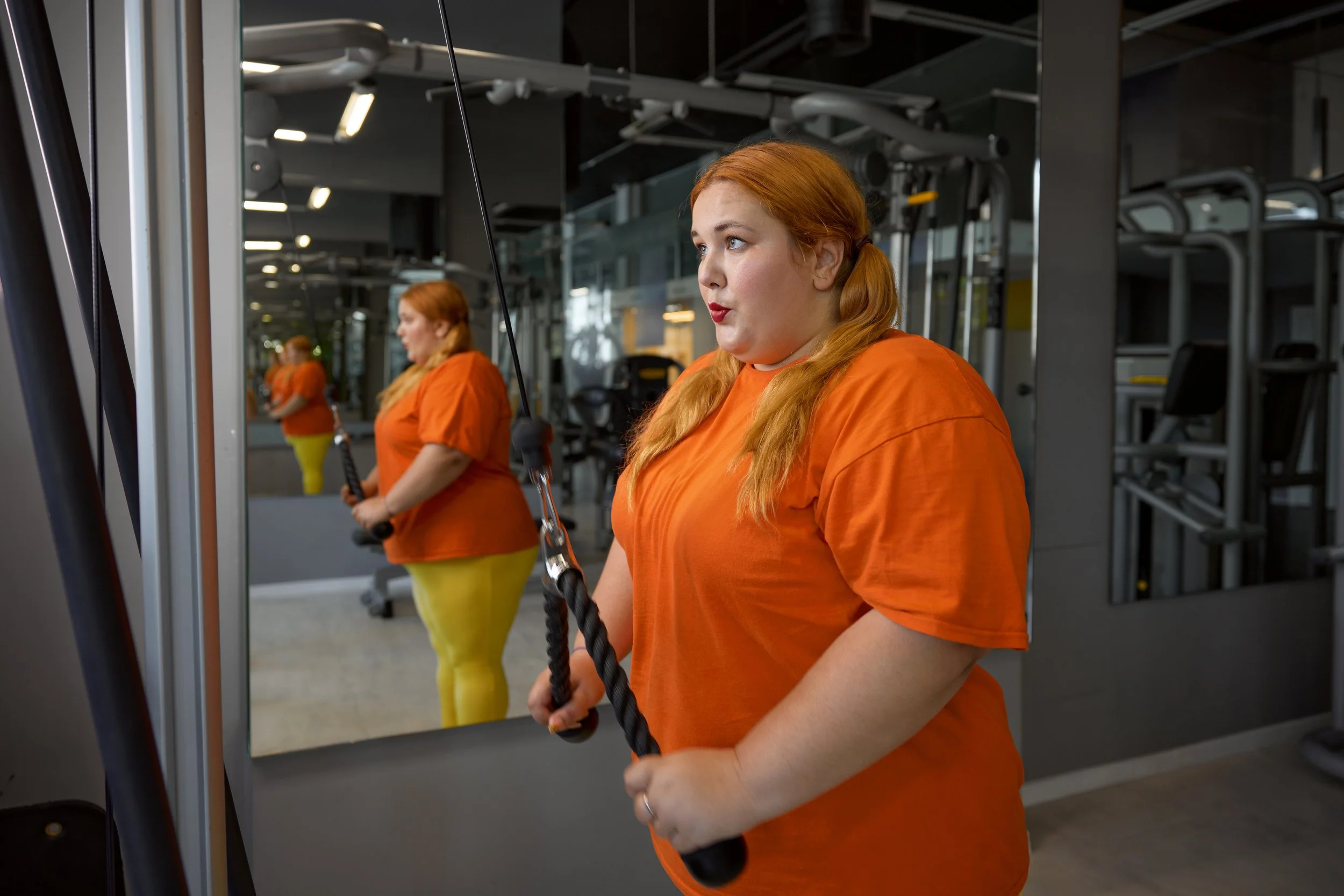
Movement is Medicinal
Ok, so, what does this actually look like? What’s the dose, the frequency, the timing? The answer is whatever feels like the easiest option to start. The research is pretty clear about one thing: you don’t need a perfect plan, you just need to move more! Here are some examples of the kinds of movement you can do:
Resistance training:
bodyweight strength (pushups, squats, lunges, pullups)
weight lifting (dumbbell, barbell, kettlebell - whatever you like!)
resistance band exercises
yoga (especially Vinyasa, Ashtanga, or power yoga)
Pilates (great option if you have chronic pain or lots of injuries)
Moderate, sustained elevated heart rate
Any repetitive movement that gets your heart rate to a moderately high level for at least 10 minutes:
walking (fast or uphill if regular walking feels easy)
cleaning (pick up clutter, take out trash, vacuum, wipe counters/mirrors/windows, scrub bathtub, etc.)
kickboxing (seated or standing)
swimming laps
hiking
rollerblading or skating
dancing
marching or walking in place
cycling (enough resistance for moderate heart rate)
elliptical (enough resistance for moderate heart rate)
jogging (slow enough to keep heart rate moderate)
High Intensity Intervals
Alternating intervals of high heart rate and low heart rate (safest for people who have established a baseline of moderate heart rate training):
calisthenics
dance
sprints (run, cycle, swim, etc.)
bootcamp-style workouts
kettlebell ballistics

How much and how often?
Great news: Large and small doses are both effective at clearing glucose and improving insulin sensitivity! Here are some examples used in the research studies I consulted for this blog.
Large doses (30+ minutes) are most effective done 3-5 times per week.
10 minute warmup. 15+ minute walk at 4-6 RPE. 10 minute cooldown. Gradually increase walk time/distance according to changes in RPE.
5 minute warmup. 30+ minutes at 70% heart rate max (zone 2-3). 5 minute cooldown.
10 minute warmup. Alternate 1 minute at 85% of your heart rate max (zone 4) with 1 minute of recovery (zone 1-2) for 10 rounds. 10 minute cooldown.
5 minute warmup. 20+ minutes resistance training. 5 minute cooldown.
Small doses (2-15 minutes) are most effective done multiple times per day.
2-5 minutes of general movement every 30-60 minutes. Movement could be walking, squats, cleaning, etc.
Six minute-long intervals of uphill walking or strength training before meals. Rest 1 minute between intervals. Total time: 12 minutes.
15 minute walk after meals.
In summary…
Movement is a consistent, almost magical, universally helpful intervention for insulin resistance and glucose stability.
All doses (large and small) count!
Frequency is more important than intensity.
I hope you found this to be helpful. Send me a note with questions and concerns - I’d love to expand on this blog in the future! contact@sarahempowers.com