
What is “size-inclusive” training, and why does it matter?
By Sarah Petty
When people ask “what do you do?” I often have a little pause before I answer.
Not because I’m unable to condense a vast amount of information into a few words, but because I’m trying to gauge how deep I need to go with my explanation in order for the listener to get it.
If I’m engaging in a surface-level conversation, I might just stop at “I’m a personal trainer and nutritionist” and leave it at that.
If I’m talking to someone I’m more connected to, or someone who’s a healthcare professional? I might go deeper and say “I make movement and nutrition more accessible for people who don’t feel welcome in traditional gyms and wellness spaces.”
I should probably just always answer the latter way, but I’m still working up the courage to be willing to have those in-depth conversations with everyone who asks. Sometimes I have to manage my energy! The truth is, size-inclusive training benefits EVERYONE and that’s why it’s the cornerstone of my business.
Movement belongs to everyone
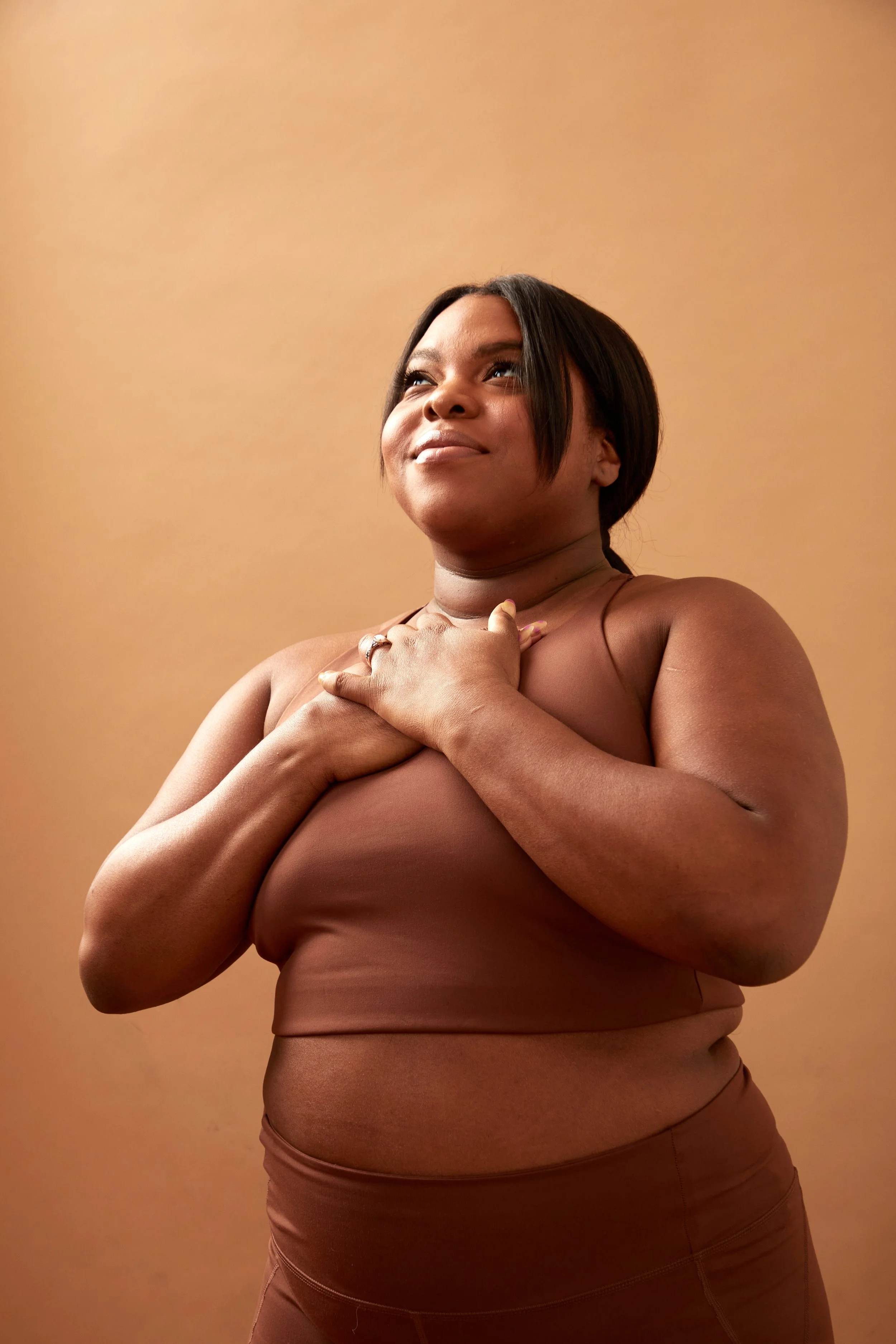
Most people that I come across agree: in theory, movement belongs to everyone to be used in whatever way they want. Some people express surprise or confusion when I bring up size inclusiveness with training. Why can’t people just move? Where does it need to have a special label? Isn’t the whole point of personal training…personalization? Isn’t size inclusivity just inherently included when working with humans, who come in a variety of sizes?
The answer to that question SHOULD BE “yes” - but unfortunately, in practice, it is not.
Examples:
..of how the modern approach to fitness classes, personal training, exercise, etc. is not inherently size inclusive:
Visual instructions
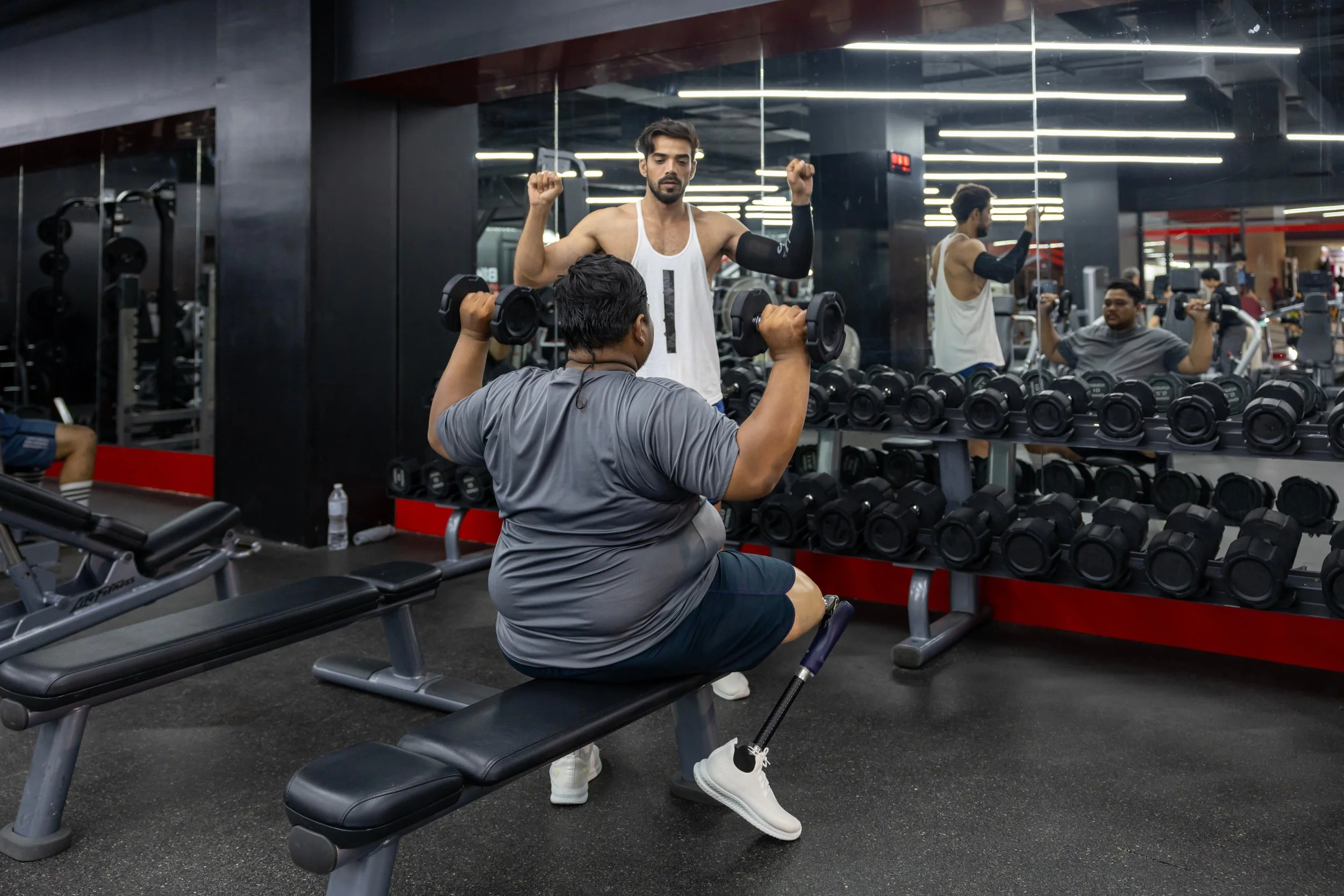
Follow-along videos, books, group classes, and social media typically depict thin, often tall and lanky, humans performing movements that may not be possible (without adaptation) for a person with a larger belly, chest, arms, or legs. A larger person (especially a beginner) may not know how to adjust the movement to be possible, safe, or effective for themselves. And if they aren’t a movement professional, they shouldn’t have to know how to do that in every single interaction with movement guidance! That’s an invisible “tax” fat people pay just to engage with movement instruction material. This is one of many reasons why larger movement instructors are sorely needed. Visual representation alone can be so helpful for someone learning to move, without the instructor having to say any extra words.
Verbal cues
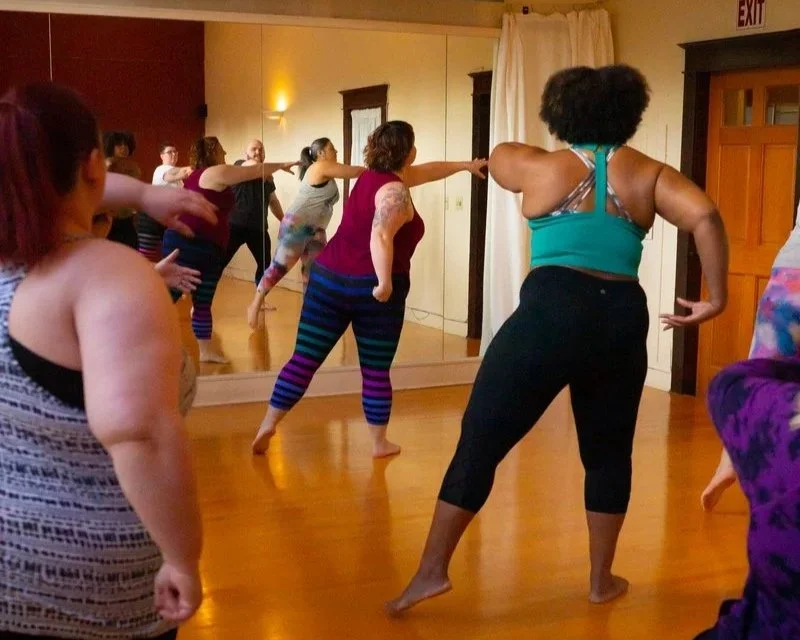
Common verbal cues such as “keep feet hip-width” or “maintain a neutral spine” become meaningless when they aren’t specific enough for larger people. Do you mean to put the feet in line with the outer flesh of my hips, or my hip bones? What if my back doesn’t make a straight line, how do I know if it’s neutral?" In live settings or short video clips, brevity can be necessary. But for 1:1 training and environments where the instructor is teaching movement (not just leading people who already know what to do), more detail is required. What are the intended outcomes of this movement? What main muscles are working, and what sensations may indicate that they are working they way we want? What might this move look and feel like in a smaller person vs. a bigger person? How does the integral shape or motion of the move take place regardless of size or ability? This information is a crucial part of verbal cues when teaching people of all sizes how to move, and it can wildly helpful for a larger person to encounter after a lifetime of feeling like they can’t do a move “right” no matter how hard they try.
Adaptations
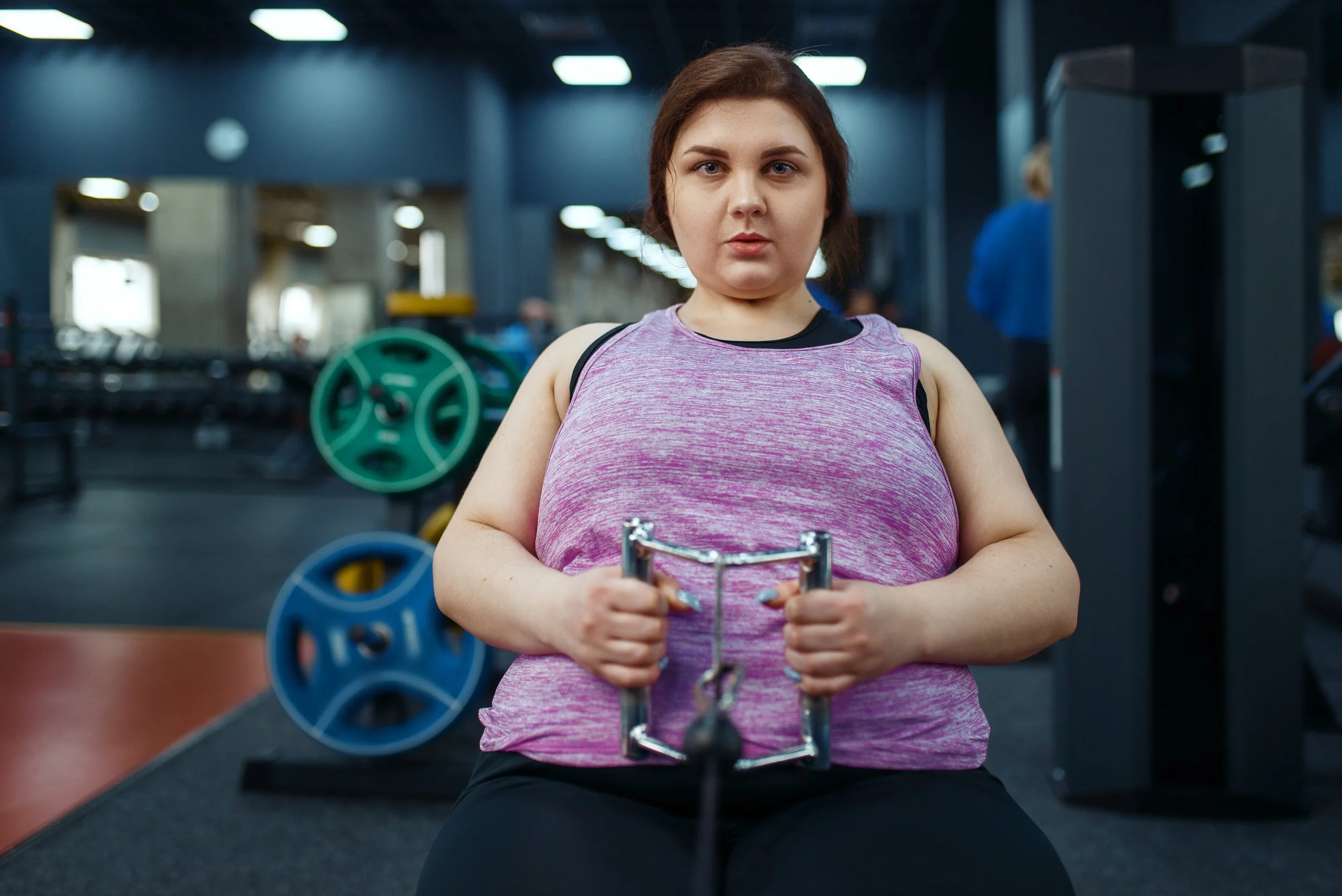
Any adaptations for stance, prop usage, or angle adjustment to help larger people do the movement safely or more comfortably are often not offered with specificity. “Do what feels good for you” is not actual guidance. Actual demonstrations of adaptions are required for them to be effectively communicated. In a class setting, if the instructor is thin in this scenario, and the majority (or all) of the people in the class are thin, the fat person has no visual or verbal cue for how to adapt movement for themselves. This means they are expected to adapt (or try) to what everyone else is doing, do something else (and stick out), or opt out completely. Again, an invisible tax, and one that may lead to the person not coming back to the class (and possibly opting out of intentional movement for awhile due to discouragement).
Assumptions
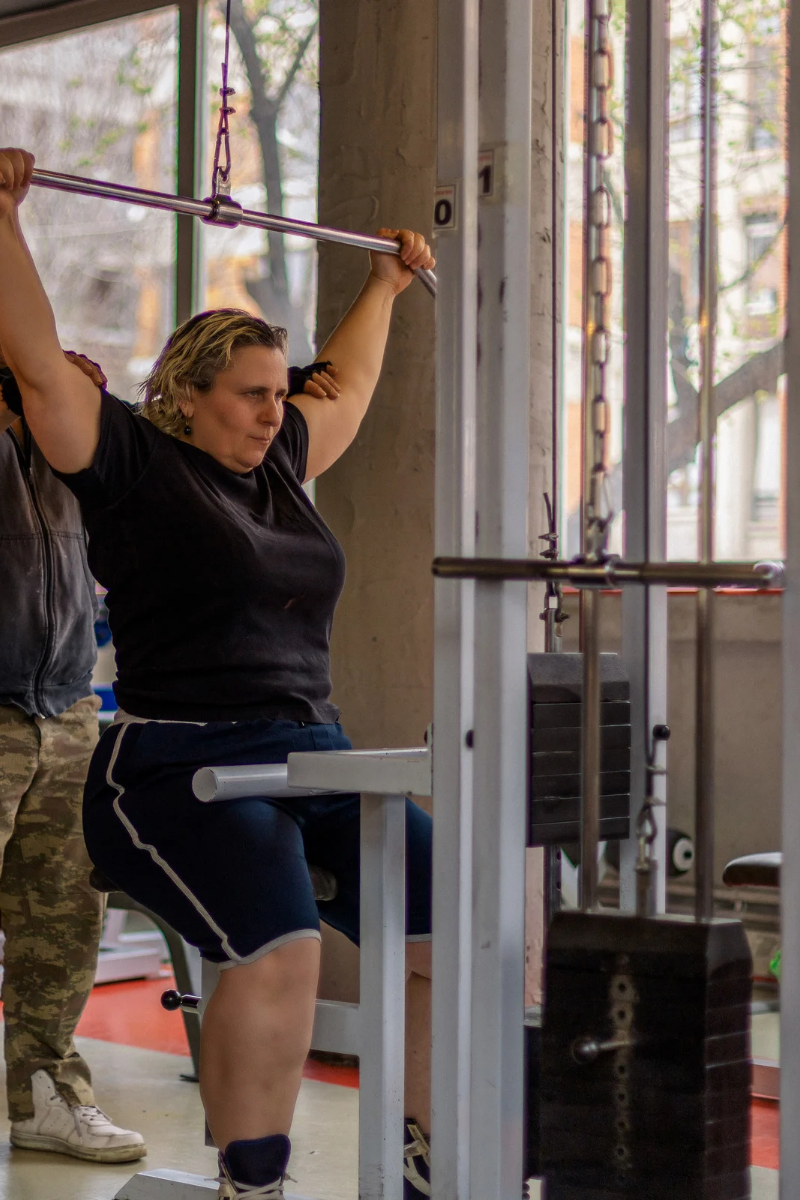
People often assume larger bodied people are weak and lazy, and need to become smaller before they are capable of high-difficulty movements. Fat people are not inherently weak or fragile. The weakness many people associate with fatness is actually deconditioning, which occurs to anyone who doesn’t move or train regularly. This bias often trickles down to group fitness instructors and personal trainers, especially newer ones or ones who work in highly insular communities, who haven’t had exposure to diverse bodies doing impressive and challenging things. The end result is a large portion of the gym/fitness population who carries that bias into their environment. And that bias is felt by larger people. No words have to be said - fat people know when they are being underestimated, laughed at, or ignored. Most plus size people have had enough of these experiences that, even when a gym is generally neutral or positive, they’re waiting for the day when someone belittles them. This environment makes movement feel even more out of reach.
And more…
There are additional practical barriers (clothing, transportation, physical accessibility) that can make it harder or impossible for a large person to function in a typical fitness environment.
The solution that many out-of-touch people jump to is “well, wouldn’t they feel more comfortable in the gym if they lost weight first?” And while I’m not going to take the time today to get into the very long list of reasons why that is a wild thing to say, I’ll just point out that many fat people are told by their doctor to go to the gym to lose weight. People should be able to use a gym without the expectation or prerequisite of weight loss. Of all the places that should be accessible for fat people (besides health care providers), it should be gyms and other movement environments.
That’s why, even in the most seemingly welcoming of environments, fat people can feel like movement is just not for them. At every turn, there are invisible taxes that make beginners (and more experienced people who just want to feel like they’re part of the group) feel excluded.
That’s why size inclusive training is not as simple as “you are welcome here.” That’s a nice sentiment (and can be sincerely meant!), but it doesn’t actually make movement more accessible for a larger person.
So what does?
Enter, Size-Inclusive Training
Size-inclusive training sits at the intersections of fat liberation, trauma-informed training, and disability advocacy.
I made a Venn diagram to help you visualize the overlap:
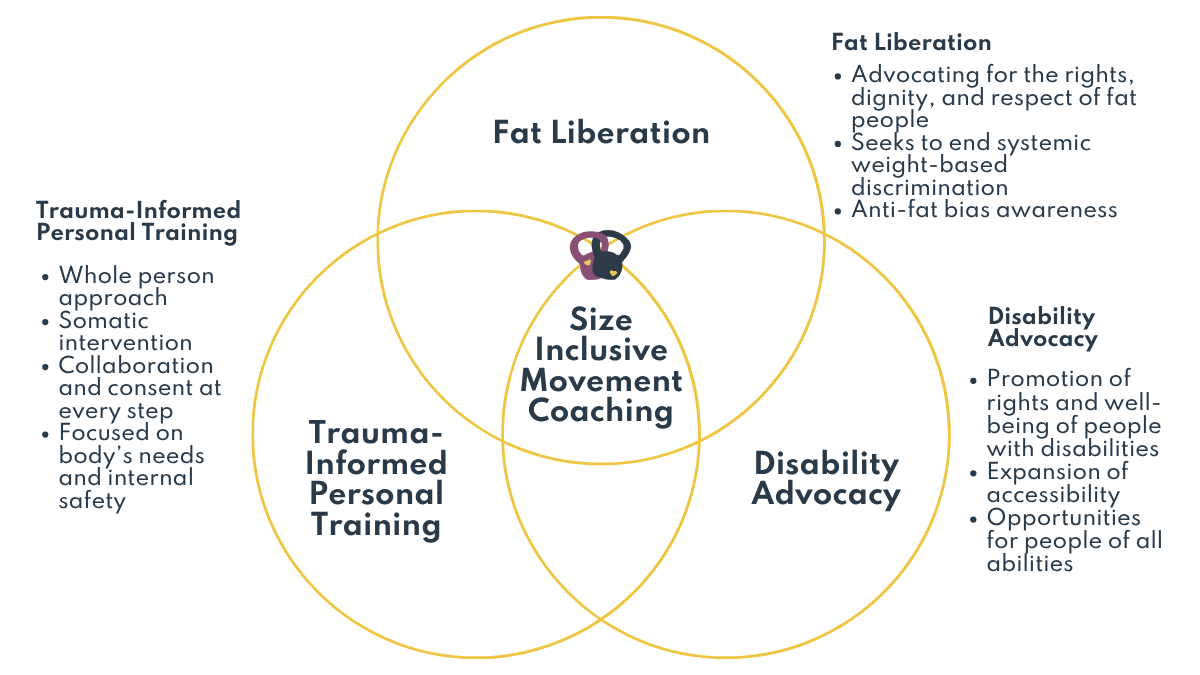
Fat Liberation is the first component of size-inclusive training, because it focuses on the dignity and respect of fat people and seeks to bring awareness to anti-fat bias. Size-inclusive training seeks to support fat people where they are at, instead of waiting for their body to change at some unspecified future date.
Trauma-Informed Personal Training is another important component. For all the reasons mentioned earlier, people can have pretty rough experiences when trying to move their bodies in a world not made for them. A trauma-informed approach acknowledges these challenges (as well as non-weight-related ones) and sees clients as a whole person who needs patience and choices rather than bootcamp drills.
Disability Advocacy is the final component in the Venn diagram. While many plus size people are not disabled, the principles of disability advocacy lay the foundation for making movement accessible for all. And since most humans will become disabled at some point in their life, this approach helps us see movement as a long-term tool for body liberation, rather than a quick fix for a “problem body.”
An effective movement coach combines these three paradigms to teach people how to move with their bodies, instead of against their bodies. This sweet spot right in the middle allows for an environment where bodies are not deemed “good” or “bad” - they just are.
Whether, how, and how often they move is no longer a moral issue, but a personal choice that ebbs and flows with the challenges of life. Movement is now a neutral tool use to improve quality of life in sustainable ways, leading to increased enjoyment and consistency.
Looking for a personal trainer who can help you have a size-inclusive approach to your movement practice? We’ve got 3 stellar coaches you can learn from, and we host Strength for Absolute Beginners periodically as a size-inclusive onramp to strength training.
Are you a personal trainer or fitness instructor who’s trying to be more size inclusive? Join our email list to get notified about an upcoming “How to be a Better Size-Inclusive Movement Coach” workshop. We also highly recommend Coach Damali Fraiser’s Inclusive Kettlebell Coaching certification.